Why kids love seeing themselves: the psychology of personalization
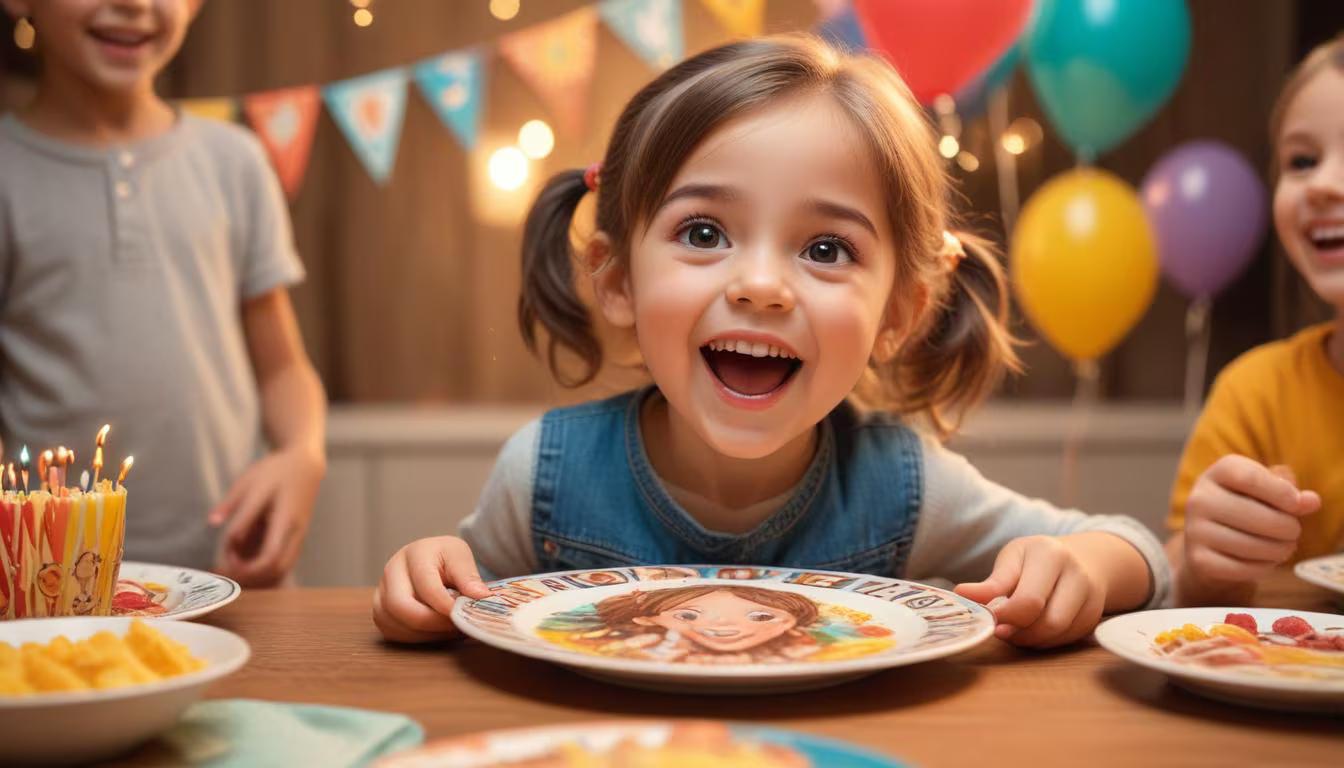
Watch a child discover a product with their own face on it (a plate, a book, a birthday banner) and you'll see pure joy. Their eyes go wide. They point at it. They show everyone nearby. "That's ME!" they announce, like they've found something incredible.
This reaction isn't random. There's real developmental psychology behind why personalized items get such strong emotional responses from children. Understanding this helps explain why personalized gifts and party supplies have grown so fast as a product category, and why they matter more than most adults think.
The mirror stage: when children first recognize themselves
This starts early, around 18-24 months, when children first develop self-recognition.
What the research shows
Psychologist Jacques Lacan described the "mirror stage" as a key moment in child development. When a toddler first recognizes themselves in a mirror, something shifts. They understand that they exist as a separate person, distinct from others, with their own appearance and identity.
The classic experiment for measuring this is the "rouge test." Researchers place a mark on a child's face without them knowing, then show them a mirror. Before about 18 months, children treat their reflection as another child. After 18 months, they touch the mark on their own face, showing they understand the reflection is them.
How this connects to personalization
Personalized products trigger a more sophisticated version of this same response. When a child sees themselves illustrated as a superhero on a birthday plate, they're doing self-recognition with a twist: they're recognizing themselves in a new, aspirational context.
It's not just "that's me." It's "that's me as a superhero." The child recognizes themselves and sees themselves transformed into something exciting at the same time. That combination is powerful.
Identity formation and the stories we tell about ourselves
Between ages 3 and 7, children are figuring out who they are. What they like, what makes them special, how they fit in. This is a big developmental window.
Narrative identity in children
Developmental psychologists use "narrative identity" to describe how we build our sense of self through stories. Adults do this all the time. Children are just starting, and they're especially open to stories that cast them as important, capable, and valued.
Personalized products as identity narratives
When a child sees themselves as a dinosaur explorer on their party cups, or a fairy princess on their birthday banner, the product tells them a story about who they could be. They're the main character. During the identity formation years, that kind of reinforcement matters.
Children at this age often think about "possible selves," imagining who they might become. A personalized superhero illustration isn't just a party decoration. It's fuel for their imagination.
Why generic characters don't have the same effect
A plate with Spider-Man on it is cool. A plate with your child as a spider-themed hero hits different. The difference isn't just visual. It's about who the story is about. With a generic character, the child is a spectator. With a personalized illustration, they're the protagonist. That shift changes everything.
The endowment effect: why "mine" matters
Behavioral economists have documented the "endowment effect," the phenomenon where people value things more simply because they own them. This effect is even more pronounced in children.
Research on children and ownership
Studies have shown that children as young as 2-3 years old demonstrate a strong endowment effect. Give a child a toy and then offer to trade it for an identical one, and they will refuse. Their toy, simply because it is theirs, is perceived as more valuable.
Personalization amplifies the endowment effect
When an item has a child's name, face, or likeness on it, the ownership connection is not just implied. It is visual and undeniable. That plate is not just "my plate because it was given to me." It is "my plate because I am literally on it." The strength of the ownership bond increases dramatically.
This is why personalized items become treasured keepsakes while generic party supplies go in the trash. Parents often report that their children want to save their personalized birthday plates long after the party is over. The object has become part of their personal story, not just a piece of tableware.
Social recognition and the birthday child
A birthday party is a social event organized around recognizing one specific child. Personalization amplifies that recognition in ways that matter for social-emotional development.
Being seen and valued
Every child needs to feel seen, to feel that others notice and celebrate who they are. A birthday party addresses this directly. Personalized decorations take it further by making the recognition visual and obvious.
When every plate, cup, and banner has the birthday child on it, the message is clear: this is all about you. For a child navigating the social world of school and friendships, that kind of unambiguous recognition means a lot.
Social status among peers
There's a social dynamic too. When other kids see the birthday child in themed illustrations on everything, it reinforces their special status for the day. Other kids react with real amazement, which boosts confidence.
This isn't about ego. It's about the healthy experience of feeling celebrated by your community on a day that's supposed to be about you.
The role of art style in emotional response
The art style matters more than you'd think. Not all personalization has the same effect.
Why illustrated styles work better than photos
You might assume a photograph on a plate would be the most impactful personalization. But illustrated versions of a child (cartoon, watercolor, digitally rendered) tend to get stronger emotional responses than straight photographs.
There are several reasons for this:
- Transformation is part of it. Seeing yourself turned into a cartoon superhero is just more exciting than seeing your regular photo on a plate.
- Imagination. Illustrated styles engage the child's imagination differently. The illustration exists in the same visual language as their favorite stories and shows.
- Aspirational identity. An illustration can show the child flying, exploring the ocean floor, riding a dinosaur. That feeds directly into "possible selves" thinking.
- It just looks good. High-quality illustrations are appealing. Children respond to good art even at young ages.
This is why at Confetti, we offer multiple art styles, watercolor, cartoon, cinematic, illustrated, and 3D render, rather than just printing photos on products. Each style activates a different imaginative response while maintaining the personalization that makes the product special.
Age-specific responses to personalization
How children respond to personalized items changes as they grow.
Ages 1-2: recognition joy
At this stage, children are just developing self-recognition. Their response to seeing themselves in an illustration is primarily one of recognition and excitement. "That is me!" is the entire experience, and it is wonderful.
Ages 3-4: story integration
Children this age begin to integrate personalized items into their pretend play and storytelling. A personalized superhero plate might inspire an entire afternoon of playing superhero. The product becomes a prop in their imaginative world.
Ages 5-7: social sharing
This is the sweet spot for personalization at parties. Kids are socially aware enough to understand their personalized items are unique, and they take real pride in showing friends. "Look, that's ME as a space explorer!" becomes the highlight of the party.
Ages 8-10: appreciation of craft
Older children begin to appreciate the artistry and effort behind personalization. They notice and comment on the quality of the illustration, the accuracy of the likeness, and the creativity of the theme application. Their response becomes more nuanced but no less positive.
Ages 11-12: selective enthusiasm
Pre-teens may roll their eyes at some forms of personalization but remain genuinely delighted by high-quality, tasteful personalized items. The key at this age is sophistication. A beautifully rendered illustration in a cool art style works. A babyish cartoon does not.
The memory effect: why personalized parties are remembered
Research on memory formation shows that emotionally charged experiences are encoded more strongly and recalled more vividly than neutral ones. This has direct implications for personalized party experiences.
Emotional tagging in memory
When an experience triggers a strong emotional response, the brain's amygdala "tags" the memory for better storage. The joy and pride a child feels seeing themselves as the star of their party creates exactly that kind of charge.
Distinctiveness helps recall
Memory research also shows that distinctive, unusual experiences stick better than routine ones. A personalized party is by definition distinctive. It's unlike any other party the child or their friends have been to, which makes it more likely to become a core childhood memory.
Photos reinforce the memory
Personalized party supplies photograph well. Parents take pictures, share them, revisit them. Each time a child sees a photo from their personalized party, the memory gets reinforced. The personalized products become visual anchors for the whole party memory.
Practical applications: making personalization count
Understanding the psychology behind personalization helps you make smarter choices about where and how to use it.
High-impact personalization opportunities
Based on the psychology, these are the highest-impact items to personalize:
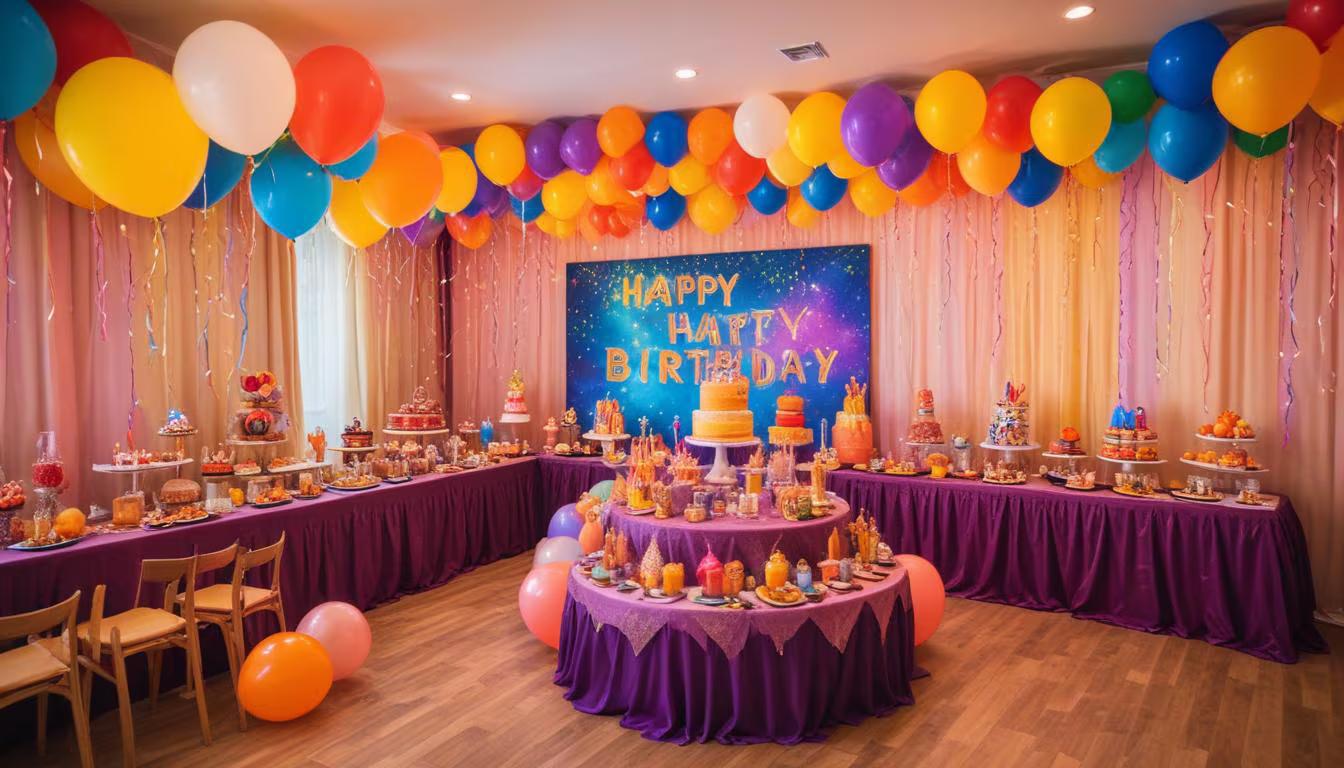
- The hero illustration / banner. This is the first thing guests see and the background of every photo. It sets the tone for the entire "you are the star" message.
- Plates and cups. These sit directly in front of the birthday child and every guest for the duration of the meal. They are looked at repeatedly and closely.
- Party hat / crown. Worn by the birthday child, visible in every photo, and a strong symbol of "today is about me."
- Cake topper. The focal point of the most emotional moment of the party, the candle-blowing and wish-making.
Lower-impact items to consider
These still contribute to the overall personalized experience but have less direct psychological impact:
- Napkins (quickly used and discarded)
- Cutlery (functional, not much visual focus)
- Favor bag contents (seen after the party, in a different emotional context)
The threshold effect
You do not need to personalize everything to get the psychological benefits. Research on environmental psychology suggests that a "threshold" of personalized items creates the overall feeling of a personalized space. Once three to four key items feature the child's likeness, the entire party feels personalized, even if some items are generic.
Creating the experience
If this resonates with you, it's easier than ever to try.
Confetti's AI-powered design tool generates a complete set of personalized party products with your child as the star of their chosen theme. Pick from themes like superhero, princess, dinosaur, space, safari, underwater, and more. Art styles range from watercolor to 3D render.
The whole process takes minutes.
It's more than a party decoration
When you put a personalized illustration of your child on their birthday plate, you're not just decorating. You're telling your child a story about who they are and who they could become. You're reinforcing their identity and creating a memory that sticks.
Start designing your personalized party suite now. For more on making birthdays special, check out our guides on choosing the right theme and birthday party trends for 2026.
Want to try it for your party?
Upload a photo, pick a theme, and get a full set of matching party supplies. Free shipping.
Start Designing Now